Every job below is one we do ourselves across San Bernardino.
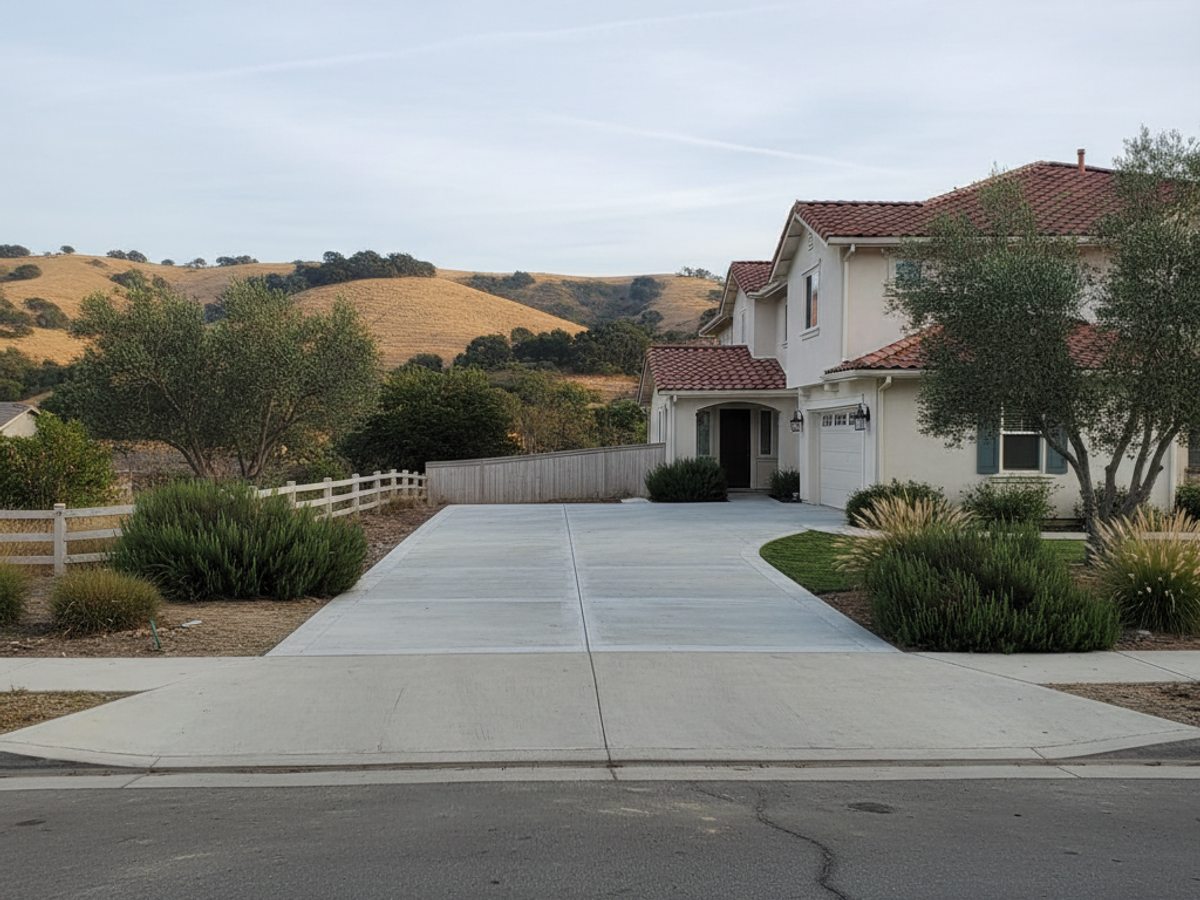
We form and pour driveways thick enough for daily vehicle traffic, usually four to six inches depending on whether you're parking a truck or an RV on it. Base compaction matters more here than almost anywhere else on the property, since a driveway takes the most repeated load of any slab you own. We reinforce with rebar or wire mesh sized to that load and broom-finish the surface so it isn't slick when it rains.
Patios get lighter reinforcement than a driveway since they're only carrying foot traffic and furniture, but they still need a slope away from the house so water doesn't pool against your foundation. We can finish it broomed, exposed aggregate, or stamped, depending on what you want it to look like. A patio poured flat instead of sloped is one of the most common repair calls we get.
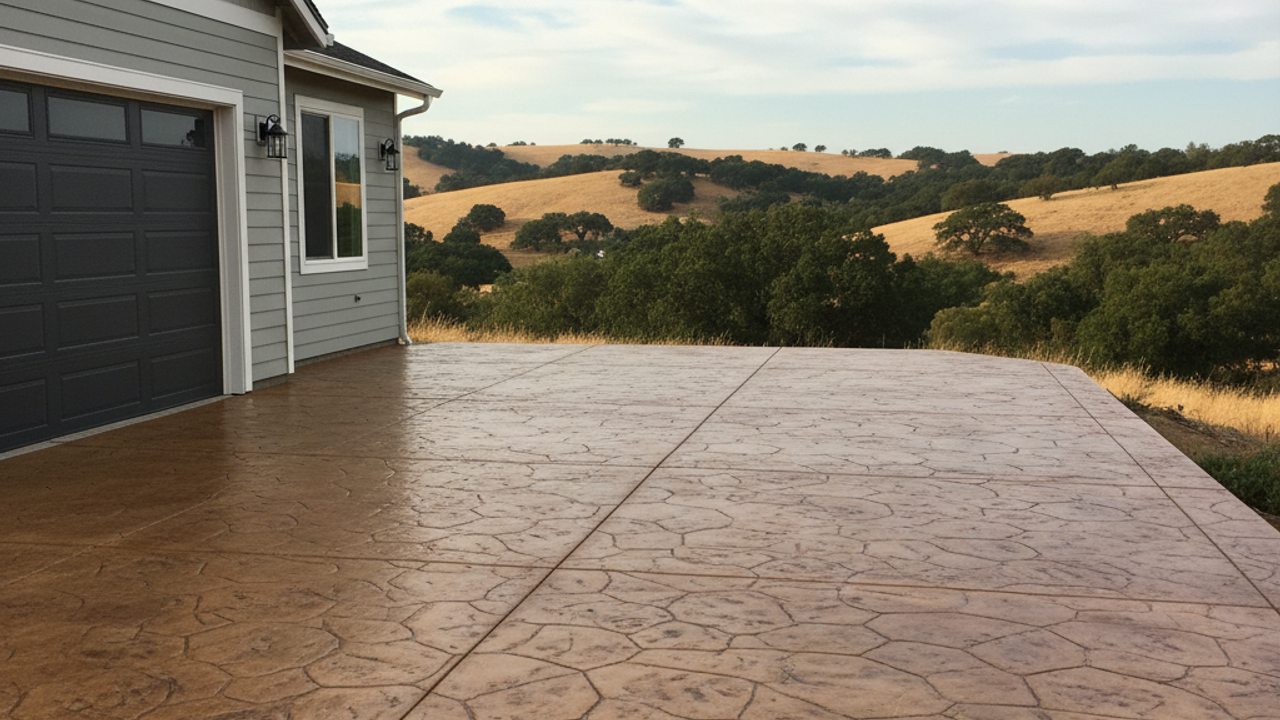
Stamped concrete gets you the look of flagstone, slate, or brick pavers without the joints where weeds and ants move in. We color and stamp the slab while it's still plastic, then seal it once it's cured, and the sealer is what keeps the color from fading in direct sun. It costs more than a plain broom finish, but it holds up the same structurally, it's the surface treatment that changes.
Cracked, sunken, or spalling concrete usually means the base underneath failed, not that the concrete itself was bad. We can mudjack or foam-lift a sunken slab section back to level in some cases, or cut out and replace just the failed panel in others. Full replacement is only necessary when the damage runs across multiple sections or the base has washed out badly.
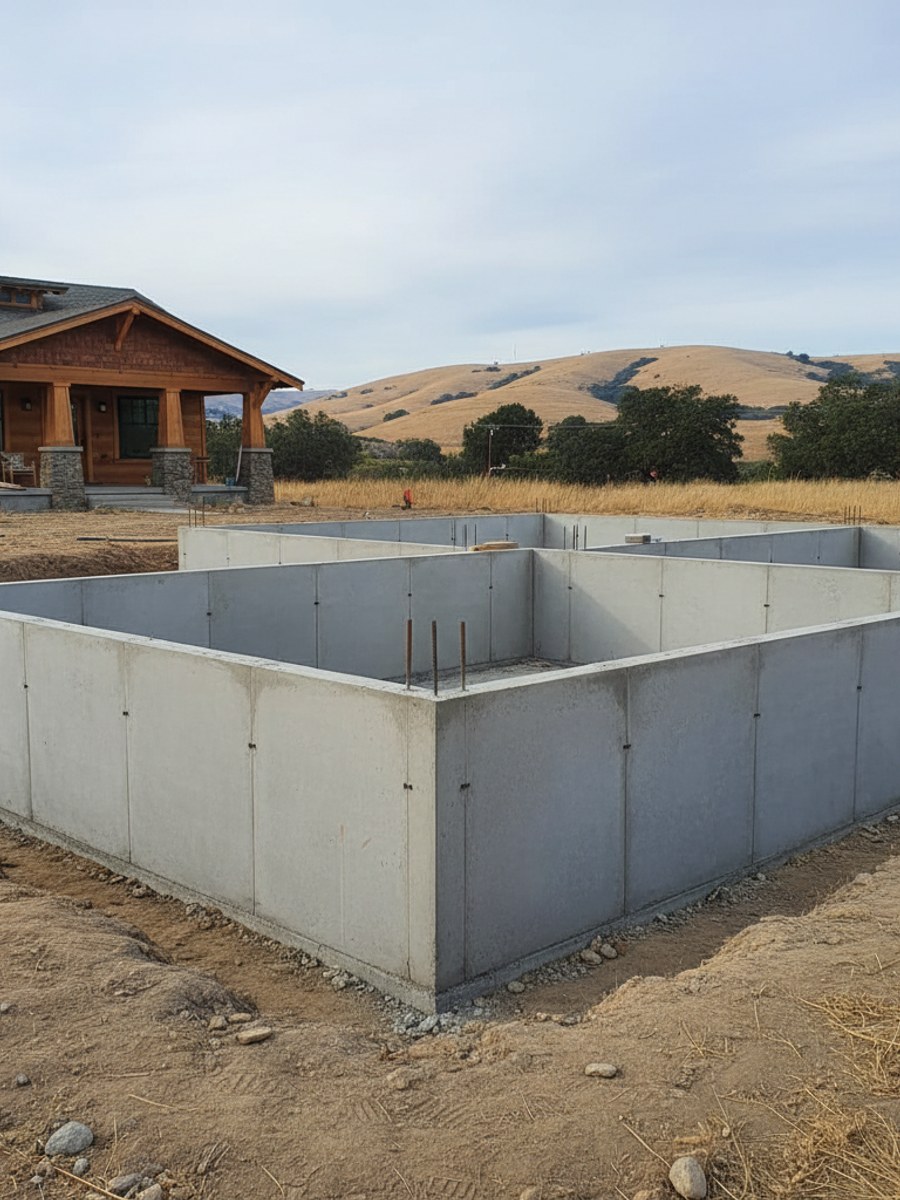
Garage floors, shed pads, and equipment slabs all require a base compacted to spec before anything gets poured, since these often carry more weight in one spot than a driveway does. We grade for drainage so water doesn't sheet toward a door threshold. Thickness and reinforcement depend on what's going to sit on it.
Steps need consistent riser heights, uneven risers are a trip hazard and one of the first things a home inspector will flag. Walkways get a broom or light exposed finish for grip, especially anywhere shaded that stays damp. We tie new walkway sections into existing slabs with dowels so they don't heave apart at different rates.
Public sidewalk sections along the curb are usually governed by city spec, and San Bernardino has requirements on thickness and slope toward the street. We pull the permit when the work touches the public right-of-way and pour to that spec. Root damage from parkway trees is the most common reason these need replacing.
A retaining wall on a slope has to deal with the soil pushing against it, which means drainage behind the wall matters as much as the concrete itself. We install drain rock and weep holes so water doesn't build up and shove the wall forward. Height and steel reinforcement depend on how much soil the wall is actually holding back.
Old, cracked, or heaved concrete has to come out before anything new goes in, and that includes hauling it off, not just breaking it up and leaving it in a pile. We saw-cut clean edges where old concrete meets a section we're not replacing, so the new pour ties in without a ragged seam. Disposal fees are usually part of the quote, not an add-on afterward.
Resurfacing is a thin overlay poured over existing concrete that's still structurally sound but looks worn, cracked on the surface, or discolored. It's cheaper than tearing out a slab that doesn't actually need to be replaced. It won't fix a slab that's settling or has cracks running all the way through, that's a repair or replacement job instead.
Four steps, and no surprises in any of them.
You tell us what you want doing, we look at what is actually there, and we ask the awkward questions early.
In writing, itemised, free. If something might add cost later we flag it now rather than at the end.
Same crew throughout. We cover your floors, keep the dust down and tidy up before we leave each day.
You point out anything you are not happy with and we fix it before the invoice, not after.
Concrete work covered throughout the Inland Empire.
Questions that come up once a project actually gets underway.
Describe the problem and we will tell you what it probably is. No obligation.